The 4 levels of questioning
Blank’s levels puts questions and directions into 4 levels. It starts at Level 1 with basic questions that ask for simple responses. As you go up the levels, the questions get harder and more complicated and that require abstract answers.
Types of questions to use
When using the Blank's levels of questioning framework, there are different types of questions that can be used to help you get a response. These will change and become more complex as the child moves up through the levels.
Top tips
Along with the strategies to support understanding of language, we recommend:
- asking easier questions if your child does not understand
- introducing new vocabulary at level 1
- offering choices if your child is stuck
- modelling longer answers to help scaffolding
- relating back to previous experiences
- acknowledging a variety of responses and encouraging them to have a go
Remember, a child will find it easier to learn language when you comment rather than question. For every 1 question that you ask, try to make 4 comments. This will model the correct answers to the child. For example, "Can you find the tractor? Look I have a tractor. The tractor can pull the trailer. There's a car! That's another vehicle. The tractor is big and blue."
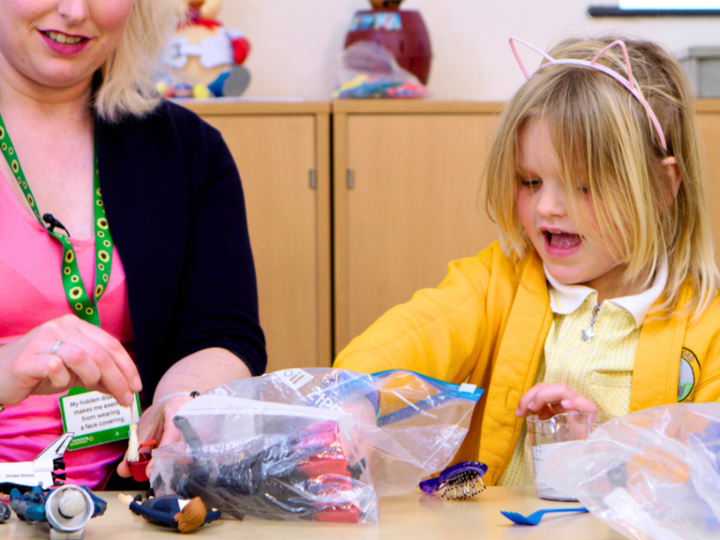
Using Blank's questions during everyday activities